

The 5th Amendment: a legal superhero in the world of rights and justice. But when did this mighty amendment swoop in to save the day? If you’ve ever wondered about the origins of this essential piece of the Constitution, you’re in for a treat.
Overview of the Fifth Amendment
The Fifth Amendment protects individuals’ legal rights in the United States. This constitutional safeguard ensures justice and fairness in legal proceedings.
Key Provisions
Provisions in the Fifth Amendment include protection against self-incrimination, double jeopardy, and the guarantee of due process. Individuals cannot be tried for the same crime twice. Additionally, the amendment affirms the right to remain silent during legal interrogations. Compensation is also required when private property is taken for public use, known as eminent domain.
Historical Context
Historical context reveals that the Fifth Amendment was ratified on December 15, 1791. It emerged as part of the Bill of Rights, a response to concerns regarding government overreach. Founding Fathers aimed to secure citizens’ rights after experiences with British rule. The amendment reflects Enlightenment principles, emphasizing individual rights and limitations on government power.
Timeline of the Fifth Amendment
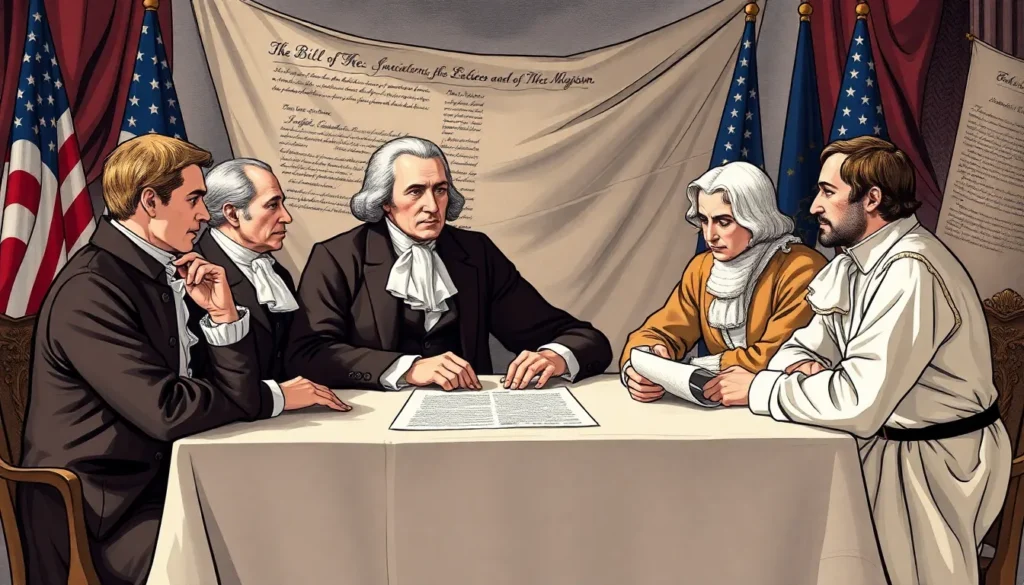
The Fifth Amendment’s timeline showcases its critical role in American legal history. Significant events shaped its development and adoption into the Bill of Rights.
The Drafting Process
In 1789, James Madison proposed the amendment during the First Congress. Lawmakers debated the necessity of protecting individual rights, reflecting concerns about government power. Various iterations occurred, with focus on self-incrimination, double jeopardy, and due process. Legal scholars influenced the language, ensuring the amendment addressed pressing societal issues of the time. Ultimately, the drafting process emphasized Enlightenment ideals, aiming for a balanced relationship between citizens and the state.
Ratification Date
On December 15, 1791, the Fifth Amendment achieved ratification as part of the Bill of Rights. This monumental event followed vigorous debates among states regarding government limitations. Initially proposed alongside other rights, it gained swift support from the necessary number of states. Ratification occurred in a climate of heightened awareness about individual liberties. States recognized the amendment’s significance in defending citizens against potential governmental abuses.
Significance of the Fifth Amendment
The Fifth Amendment serves as a cornerstone of legal rights and protections in the United States. It safeguards individuals from government overreach and promotes justice through essential legal principles.
Legal Implications
Individuals gain vital protections under the Fifth Amendment, particularly against self-incrimination and double jeopardy. The provision ensures a person cannot be tried twice for the same offense, promoting fairness in legal proceedings. Moreover, the requirement for due process mandates that laws and legal proceedings follow established rules and principles, preventing arbitrary governance. Courts apply these protections rigorously, shaping legal standards and preserving individual rights.
Impact on American Society
The Fifth Amendment significantly influences American society by fostering a culture of respect for individual rights. Public awareness of due process rights encourages citizens to assert their protections in legal circumstances. Legal professionals often reference this amendment in cases involving criminal justice, reinforcing its importance in safeguarding freedoms. As discussions around civil liberties grow, the Fifth Amendment remains a pivotal reference point, shaping conversations on rights and societal expectations.
Ongoing Relevance of the Fifth Amendment
The Fifth Amendment maintains crucial importance in American law and society today. Its principles continue to guide legal proceedings and protect individual rights.
Recent Cases
Several recent court cases underscore the importance of the Fifth Amendment. In Miranda v. Arizona (1966), the Supreme Court established that individuals must be informed of their rights against self-incrimination. The ruling transformed law enforcement practices across the nation. More recently, in Salinas v. Texas (2013), the Court ruled on the implications of remaining silent during questioning and its relation to self-incrimination protections. These cases exemplify ongoing debates regarding the amendment and its interpretation in contemporary legal contexts.
Public Perception
Public perception of the Fifth Amendment reflects its vital role in safeguarding personal rights. Surveys indicate strong support for protections against self-incrimination and double jeopardy among citizens. Awareness of due process issues has grown, particularly following high-profile cases involving wrongful convictions. Educational initiatives further promote understanding of the amendment’s significance. Media coverage amplifies discussions surrounding civil liberties, emphasizing the Fifth Amendment as a central component of the justice system. These factors contribute to a broader acknowledgment of individual rights and the necessity of limiting government power.
The Fifth Amendment remains a vital part of American legal tradition. Its ratification on December 15, 1791, marked a significant step in safeguarding individual rights against government overreach. This amendment not only protects against self-incrimination and double jeopardy but also ensures due process, reinforcing the principles of justice and fairness.
As society evolves, the relevance of the Fifth Amendment continues to resonate. Ongoing discussions and landmark court cases illustrate its enduring importance in protecting civil liberties. The commitment to uphold these rights reflects a collective understanding of the necessity to balance governmental power with individual freedoms, ensuring that the spirit of the amendment thrives in modern America.