Table of Contents
ToggleA bedroom isn’t just where you sleep, it’s your personal refuge, the one room in your home that exists entirely on your terms. For a single woman, this space becomes a blank canvas to design exactly how you want it, without compromise. Whether you’re starting from scratch or refreshing a tired room, thoughtful planning around layout, color, lighting, and décor can transform your bedroom into a sanctuary that reflects your personality while supporting the comfort and functionality you need. This guide walks you through the key elements of designing a single woman bedroom that’s both beautiful and practical, helping you create a space where you genuinely want to spend your time.
Key Takeaways
- Prioritize a functional layout by positioning your bed where you can see the door for security, ensuring clear traffic flow, and floating furniture in small spaces to enhance the sense of openness.
- Choose a calming color palette with cooler tones like soft blues and greens or warm neutrals as your base, keeping color saturation low and testing samples at different times of day before committing.
- Invest in quality bedding with natural fibers like Egyptian cotton or linen, layer textures with duvets and throw pillows, and add window treatments that balance light control with style.
- Create lighting layers using overhead fixtures with dimmers, warm-toned bedside lamps for reading, task lighting for work areas, and accent lighting like wall sconces or LED strips to set the mood.
- Maximize storage with under-bed containers, wall-mounted shelves, closet organization systems, and closed storage solutions to keep your single woman bedroom clutter-free and visually calm.
- Personalize your space with intentional wall art, mirrors to reflect light, low-maintenance plants, and minimal accessories that reflect your personality without creating visual noise.
Create a Functional Layout for Your Space
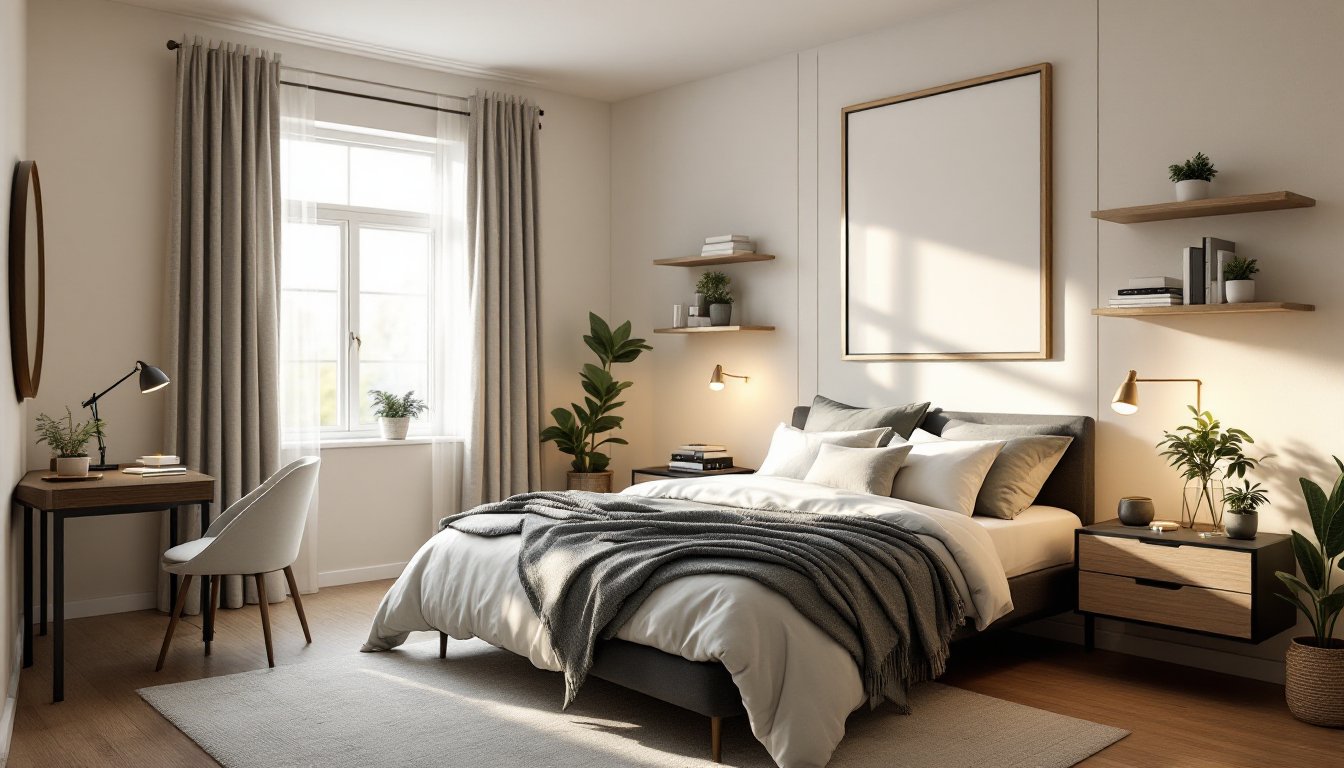
Layout is the backbone of a good bedroom design, get it right, and everything else follows naturally. Start by measuring your room and identifying fixed elements: windows, doors, closets, and electrical outlets. Your bed is usually the anchor piece, so position it where you can see the door (this creates a psychological sense of security) but avoid placing it directly in the window if you’re concerned about drafts or light at night.
Consider traffic flow. You should be able to walk from your door to your bed, closet, and any other key areas without obstacles. If your room is small, floating the bed (placing it away from walls) can actually make the space feel larger and give you more wall space for storage or a desk. A nightstand on each side of the bed is practical for lamps, a phone charger, and a book, even if you live alone, the symmetry and function are worth it.
If you work or study from home, dedicating a corner to a small desk keeps that activity separate from your sleep zone, which improves sleep quality. A slim writing desk, a comfortable chair, and good task lighting (more on that below) create a functional work nook without dominating the room. Finally, leave clear floor space, clutter-free ground plane makes a room feel larger and calmer, which is exactly what a bedroom should feel like.
Choose a Calming Color Palette
Color sets the emotional tone of your space. Research shows that cooler tones, soft blues, greens, grays, and muted purples, promote relaxation and better sleep, while warm tones like terracotta, warm grays, and soft yellows create coziness and energy. The best bedroom palette combines one or two main colors with a neutral backdrop.
Start with a neutral wall color (warm white, soft gray, or greige, a gray-beige hybrid) as your base. This gives you flexibility to change accents through bedding, art, and textiles without repainting. If you want deeper color, consider painting just one accent wall or the wall behind your bed: this creates visual interest without overwhelming the space. Many designers suggest keeping the color saturation relatively low in a bedroom: think dusty rose rather than hot pink, sage rather than forest green.
Don’t forget the ceiling. A slightly darker or warmer ceiling color can make a high ceiling feel cozier, while a lighter ceiling in a small room helps it feel more open. Test paint colors with samples on your wall and observe them at different times of day, natural light, evening light, and artificial light all affect how a color reads. Paint coverage typically runs about 350–400 square feet per gallon, so measure your walls before buying.
Select Bedding and Textiles That Reflect Your Taste
Your bed is often the focal point of the room and the place where you’ll spend the most time, so invest here. A quality mattress (memory foam, latex, or hybrid, depending on your preference) is non-negotiable: cheap mattresses wear out in 5–7 years and sleep comfort directly affects your health.
For sheets, natural fibers, 100% cotton (preferably Egyptian or Pima cotton), linen, or a cotton-linen blend, breathe better and feel softer than synthetics. Thread count matters up to about 800: beyond that, you’re mostly paying for marketing. A good set typically runs $80–150 for quality that lasts several years. Wash new sheets before use to remove finishes and improve feel.
Layer your bedding with a duvet or comforter (pick fill weight based on your climate, lighter for warm regions, heavier for cold), a decorative top layer like a quilt or throw, and throw pillows that match your color palette. This layering adds texture and visual interest while staying functional. For additional warmth and coziness, add a weighted blanket or a cozy throw folded across the foot of the bed. Window treatments matter too: sheer curtains filter light during the day, while blackout curtains or shades block light for better sleep at night. If privacy isn’t a concern, consider linen or cotton curtains that soften incoming light beautifully.
Add Lighting Layers for Ambiance and Functionality
Bedroom lighting serves multiple purposes, so you need more than overhead light. Layer your lighting into three types: ambient (overall room light), task (reading, dressing, working), and accent (mood lighting).
Overhead ceiling fixtures provide ambient light, but on their own they’re harsh and unflattering. Use a dimmer switch (a simple retrofit: most electricians can install one in 30 minutes) to control intensity, this transforms a fixed ceiling light into flexible ambient lighting. Pair the overhead with bedside lamps (10–15 watts of warm light, around 2700K color temperature, is ideal for reading and winding down) on your nightstands. If you have a desk, add a task lamp with brighter light (3000–4000K) for focused work.
For accent lighting, consider wall sconces flanking your bed or above a vanity, LED strip lights behind floating shelves or along a headboard (these add subtle ambiance without clutter), or a string of warm-toned fairy lights if your style leans bohemian or cozy. Avoid cool-toned (blue) light in the evening, as it suppresses melatonin and disrupts sleep: warm white or amber light is better after sunset. Smart bulbs let you adjust brightness and color temperature from your phone, giving you flexibility at a reasonable cost ($10–20 per bulb).
Incorporate Storage Solutions That Work
Storage is practical and aesthetically important, visible clutter kills the calm bedroom vibe you’re aiming for. Start with what you have: a closet, dresser, and under-bed space are your baseline. Under-bed storage containers (plastic, wood, or upholstered) hold off-season clothing, extra bedding, or shoes: measure the clearance under your bed frame first (typically 6–12 inches) to ensure containers fit.
Wall-mounted shelving above a desk, dresser, or empty wall adds storage without floor footprint and can display books, plants, or decorative objects. Floating shelves (1–2 feet deep, 3–4 feet wide) are proportioned well for bedrooms and require only a stud and proper hardware rated for your intended load, typically 20–30 pounds per shelf for shelving hardware. Alternatively, a tall, narrow dresser or bookcase slots into a corner and provides vertical storage.
For clothing, closet organization is key: use matching hangers, add a second rod if you have room (doubling hanging space is straightforward with a low-cost rod kit), and use shelf dividers to keep stacks from toppling. Drawer dividers organize small items and prevent the “junk drawer” effect. Keep a donation bag in your closet and purge seasonally, this keeps storage manageable and prevents overflow. Open shelving looks best when items are intentional and edited: if you need to hide things, closed storage (a cabinet, dresser with drawers, or rolling cart with a cover) is your friend.
Personalize With Décor and Wall Treatments
This is where your bedroom becomes truly yours. Wall art, mirrors, plants, and accessories tell your story and break up the visual plane of plain walls.
Wall art can be as simple as a single large piece (36×48 inches or larger makes an impact) centered above your bed, or a gallery wall of smaller framed prints or photographs. Mix frame styles and matting for interest, or keep it uniform for a modern look. Lean smaller pieces against floating shelves rather than committing to nails everywhere. Mirrors serve double duty: they reflect light (making the room feel brighter and larger) and can be decorative objects themselves. A round mirror, a gilded antique frame, or a simple black metal frame all work depending on your style.
Plants add life and improve air quality, and they’re forgiving decor, a pothos or snake plant tolerates low light and infrequent watering. Place them on a shelf, windowsill, or in a corner with a simple planter. Textured elements like a woven wall hanging, macramé, or a fabric tapestry add warmth without overwhelming the space. Keep accessories minimal and intentional: a cluttered nightstand or dresser creates visual noise that contradicts the calm you’re trying to build.
For your walls, consider a simple accent wall with wallpaper (peel-and-stick options avoid commitment and damage) or wall paneling (shiplap or board-and-batten) if you’re handy with a nail gun and basic carpentry. These treatments add texture and character. Modern interior design platforms like MyDomaine and sources like Young House Love offer endless inspiration for gallery walls, color pairings, and wall treatments. If you’re working with a very small bedroom, similar to the challenges tackled in tiny house bedroom design, prioritize vertical décor and wall-mounted storage to avoid floor clutter.
Conclusion
Designing your single-woman bedroom is an opportunity to build a space that works exactly as you need it to and reflects who you are. Start with the fundamentals, a smart layout, calming colors, quality bedding, and thoughtful lighting, then layer in personal touches through décor and wall treatments. The goal isn’t perfection: it’s a room where you feel safe, comfortable, and genuinely happy to be. Take your time with decisions, source quality pieces where it counts (mattress, lighting, storage), and don’t be afraid to evolve the design as your tastes and needs shift. Your bedroom should be your favorite room in the house, and with intention and a little effort, it absolutely can be.