Table of Contents
ToggleA vaulted ceiling is a game-changer for living rooms, it creates visual height, draws the eye upward, and makes a space feel twice as big. But it also presents a unique challenge: where do you put the TV? A poorly planned TV wall can look awkward, leaving all that soaring space wasted above the screen. Smart homeowners are solving this by building vaulted ceiling TV walls that celebrate the architecture instead of fighting it. Whether you’re anchoring a media console to dramatic shiplap, floating shelves around the TV, or playing with lighting to highlight those peaks, a vaulted ceiling TV wall done right becomes the focal point of the entire room. We’ve rounded up the best practical approaches for 2026 that work with your ceiling, not against it.
Key Takeaways
- A vaulted ceiling TV wall becomes a room focal point when you build a full-height accent wall behind the TV using striking materials like shiplap, stacked stone, or vertical wood planking that embrace the architecture rather than fight it.
- Mount your TV at eye level (48-60 inches from floor to center) and choose a 75-inch or larger screen to properly fill the space created by a tall vaulted ceiling.
- Floating shelves and corner placements are smart solutions for vaulted ceiling TV walls in open-concept layouts, but corner TVs require careful seating angles to avoid viewer neck strain.
- Layer your lighting with dimmed recessed lights across the ceiling, wall sconces flanking the TV, and LED accent strips beneath shelves—never place lights directly above the TV as this causes eye strain and glare.
- Plan electrical runs early before drywall installation to avoid expensive and messy rewiring for TV mounting, outlets, and lighting fixtures.
- Minimalist vaulted ceiling TV walls let the architectural angles become the decoration through clean lines, neutral colors, and strict cable management hidden in in-wall conduit.
Maximize Height With Floor-to-Ceiling Accent Walls
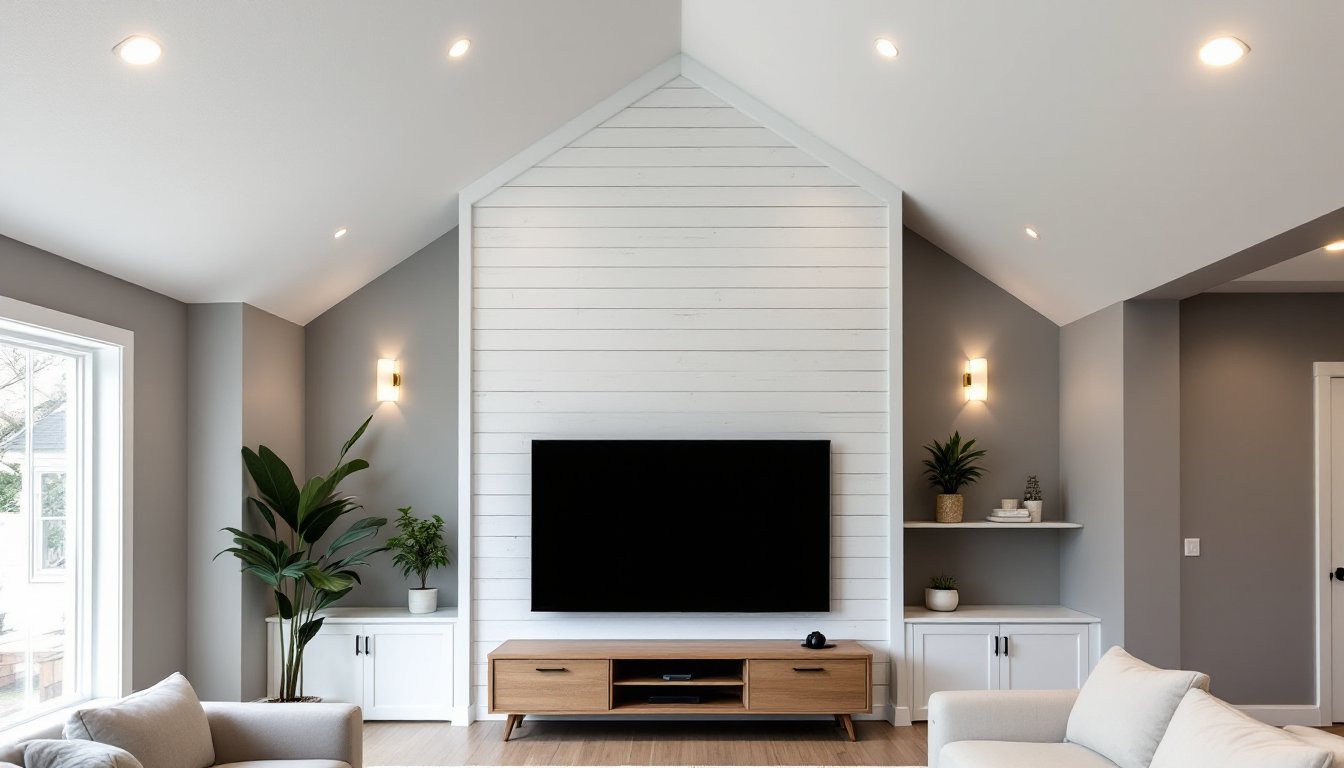
The simplest way to embrace a vaulted ceiling is to build a full-height accent wall behind your TV. This approach runs material from the floor all the way up the sloped walls, creating a unified backdrop that doesn’t fight the architecture. The eye naturally follows the angles, and the accent wall becomes the star.
Floor-to-ceiling designs work best when the wall material itself is striking. Think shiplap in weathered white or gray, stacked stone in warm earth tones, or vertical wood planking in darker stains. These finishes have dimension, they catch light differently at various heights, so the eye stays engaged as it travels up.
A few practical considerations: Make sure your TV is sized appropriately for the room. A 55-inch screen can look lost on a wall that spans 20 feet high: a 75-inch or larger usually fills the space better. Mount the TV at eye level when seated, typically 48 to 60 inches from the floor to the center of the screen, even if your accent wall extends much higher.
Creating Drama With Shiplap and Stone Finishes
Shiplap is the go-to choice for vaulted ceilings because it’s forgiving to install on angled walls. Boards run horizontally and follow the slope naturally. Expect to pay $1.50 to $3.50 per board foot for finished shiplap, depending on wood species and finish. Pine is budget-friendly: hardwoods and reclaimed looks cost more.
Stacked stone or faux stone veneer creates instant drama and reads as high-end. Real stone is heavy, you’ll need solid framing behind it and may need a permit if it’s load-bearing. Faux stone is lighter, installs with thin-set mortar like tile, and costs roughly $2 to $4 per square foot. Either way, prep your wall studs properly and use a level and chalk line to keep courses straight as they climb the slope.
Before starting, let stone or shiplap acclimate to your home’s humidity for 48 hours. This prevents cupping, warping, or gaps later. Wear safety glasses and dust mask when cutting stone or boards, especially stone, which creates silica dust.
Corner TV Placement for Open-Concept Layouts
Not every living room can support a traditional centered TV wall, especially in open-concept homes where the vaulted ceiling sweeps across the entire space. Placing the TV in a corner is a smart workaround that anchors the seating area without wasting square footage.
Corner placement works beautifully because the two walls form a natural frame for the screen. It creates a cozy media zone within a larger space. The vaulted ceiling angle above the corner becomes part of the design, you’re not fighting it, you’re using it.
The downside: corner TVs require careful angle consideration. If viewers are sitting perpendicular to the TV, head and neck strain kicks in fast. Angle the TV slightly outward from the corner, mount it on an articulating arm, or arrange seating so at least 70% of the room faces the screen directly.
Floating Shelves and Media Console Integration
Floating shelves flanking the TV in a corner setup create storage without visual bulk. Shelves appear to defy gravity, which keeps the space feeling open beneath the vaulted peak. Use ⅜-inch or ½-inch quality plywood for the shelf core, then veneer or stain it to match your trim. A shelf holding a media device and décor should support at least 50 pounds per foot, so use heavy-duty floating shelf brackets rated for your load.
A media console below the TV anchors electronics while leaving wall space above for décor or art. In corners, a console 48 to 60 inches wide works well. Keep the top surface clear except for the TV setup, clutter makes a corner feel cramped. Vertical space above the console is precious: use it for a large mirror, artwork, or a single statement plant.
When installing shelves on a vaulted wall, studs won’t run vertical the entire height. Find studs with a stud finder, mark their locations with painter’s tape, and anchor brackets directly into studs. If studs don’t align with your desired shelf placement, toggle bolts or heavy-duty wall anchors work, but studs are always superior for load-bearing shelves.
Lighting Solutions That Highlight Your Vaulted Ceiling
Lighting transforms a vaulted ceiling from architectural feature into a work of art. The key is layering, ambient light, task light, and accent light working together to draw attention upward without creating glare on the TV screen.
Recessed lights are the backbone. Space them every 4 to 6 feet across the ceiling, dimmed during viewing. During the day or when the TV is off, they wash the vaulted angles with soft illumination. Install dimmable LED recessed fixtures (not cheap, but they run cool and last years) to avoid heat buildup in tight ceiling cavities.
Wall sconces on either side of the TV provide gentle ambient light and frame the screen without glare. Mount them at eye level or slightly above, roughly 18 to 24 inches from the TV edge. Choose sconces with shades that direct light upward and downward, not toward the viewing area. You’ll need to run electrical wire through the wall, this may require a permit depending on local codes and whether you’re running new circuits.
Accent lighting under floating shelves adds visual depth. Small LED strip lights beneath each shelf graze the wall below, creating soft shadows that emphasize the vaulted shape. These are low-voltage, so installation is DIY-friendly: plug into an outlet or hardwire to a dimmer switch for control.
One critical point: Never light directly above the TV. Backlighting a screen causes eye strain and washes out the picture. Keep all overhead light sources to the sides or focused on the ceiling geometry itself.
Modern Minimalist TV Wall Designs
Minimalist vaulted ceiling TV walls strip away ornament and focus on clean lines, neutral color, and form. This style lets the architecture do the talking. A flat, painted accent wall in soft white, warm gray, or cool taupe creates a serene backdrop. The vaulted angles themselves become the decoration.
Pair a simple painted wall with a sleek media console in matte black or natural wood, a minimal TV mount with no visible wires, and understated floating shelves. Cable management is critical here, loose wires and tangled cords destroy minimalist calm. Use in-wall conduit or cable raceways to route wires behind the TV and down to the console. Prices for these systems run $20 to $60 per kit, but they’re worth it for the clean look.
Art and décor in a minimalist space are intentional. One large piece of artwork or a single architectural object draws the eye more than a gallery wall. In the context of vaulted ceilings, consider a large canvas that echoes the slope angle, or a sculptural element that plays with the height.
Color discipline matters. Stick to two to three tones, your wall color, your trim (typically white or the same as walls), and your media console wood or finish. Accent colors should be muted and used sparingly: a throw pillow, a small planter, or a framed print. The vaulted ceiling becomes the focal point precisely because nothing else competes for attention. Recent interior design inspiration showcases how this restraint creates sophisticated spaces that age well.
Warm and Cozy Rustic TV Wall Aesthetics
Rustic vaulted ceiling TV walls celebrate natural materials and warm finishes. Think exposed wooden beams, stone accents, warm lighting, and earth-tone paint colors. This style works especially well in homes with natural wood elements already present, cathedral ceilings with exposed trusses, timber frames, or log construction.
For the accent wall, vertical wood planking in medium to dark stains (honey oak, chestnut, or weathered barn wood) creates authentic texture. Reclaimed wood or reclaimed-look wood runs $3 to $10 per board foot depending on authenticity and source. Expect to hire a professional for installation if the boards are heavy or if your wall angles are steep.
Pair the wood with warm lighting. Instead of cool white LEDs, use warm white (2700K) bulbs in wall sconces and ambient fixtures. A wrought iron or bronze chandelier in the center of the vaulted space (if the ceiling is high enough) adds period authenticity. Hanging a fixture on a high vaulted ceiling means running electrical wire through the framing and using a heavy-duty mounting bracket rated for the fixture weight. This is a job for a licensed electrician unless you have electrical experience.
Rustic media consoles in reclaimed wood or wood-look metal frames ground the space. Keep the top surface styled with natural elements: a wooden bowl, stone bookends, or a collection of vintage books. The goal is “lodge cabin” comfort, not “antique shop” clutter.
One practical note: Rustic wood walls benefit from a matte finish or natural oil treatment, not polyurethane gloss. Gloss catches light in ways that can create glare and feel modern, breaking the aesthetic. Design galleries like vaulted ceiling pictures and inspiration showcase rustic approaches that balance warmth with functionality.
Planning Your Vaulted Ceiling TV Wall: Key Takeaways
Before you start any vaulted ceiling TV wall project, nail down these fundamentals. Measure the wall height and width accurately, slopes can deceive the eye. Use a laser measure for precision. Mark where studs are (they run vertically in the walls below, then angle as they meet the slope). Mount your TV to studs whenever possible: drywall alone won’t reliably support a heavy screen long-term.
Plan your electrical runs early. TV mounting, outlet placement for the media console, and lighting all need power. Running wire after drywall is installed is expensive and messy. If you’re building new or doing a major renovation, have an electrician map out circuits before framing goes up.
Prime and paint before installing wall finishes. If you’re adding shiplap, stone, or wood, the drywall beneath should be primed. This prevents moisture issues and ensures adhesive bonds properly. Use a quality primer rated for moisture, especially critical in bathrooms adjacent to your wall or in humid climates.
Safety first. Working on tall vaulted walls requires ladders or scaffolding. Wear a harness if working on steep angles. Use slip-resistant footwear, keep the ladder base clear, and never overreach, move the ladder instead. For high installations, consider architectural design resources that showcase professional approaches and can guide your planning.
A well-executed vaulted ceiling TV wall doesn’t just hold a screen, it transforms how the entire room feels.