Table of Contents
ToggleA bay window in a small kitchen is real estate you can’t waste, but when done right, it becomes one of your home‘s hardest-working features. Bay windows don’t just flood the room with natural light: they create visual depth, offer unexpected storage opportunities, and provide a cozy spot that draws the eye away from cramped quarters. Whether your kitchen is galley-style, corner-tucked, or squeezed into an apartment, a strategically designed bay window can transform how the space feels and functions. This guide walks through practical ideas for maximizing that precious window space without cluttering your already-tight kitchen.
Key Takeaways
- Small kitchen bay window ideas maximize natural light and create visual depth, making cramped spaces feel larger and more open without additional square footage.
- Strategic placement on east or south-facing walls combined with tempered glass and low-E coatings optimizes light while reducing energy costs and heat loss.
- Compact seating solutions like built-in benches with under-seat storage transform the bay into a functional breakfast nook that respects kitchen workflow and adds hidden storage capacity.
- Minimalist window treatments such as roller shades or cafe-style curtains should retract completely to avoid consuming visual space and maintain the airiness of small kitchens.
- Floating shelves and custom storage benches mounted in the bay window frame can add 8–12 cubic feet of hidden storage while keeping cooking essentials and decor accessible yet out of sight.
- Neutral paint finishes, quality upholstered fabrics, and intentional styling with fewer, curated pieces ensure the bay window complements your kitchen’s aesthetic without adding visual clutter.
Maximizing Natural Light With Strategic Bay Window Placement
Before diving into decor, think about where and how your bay window sits. Natural light is the biggest visual spacer you’ve got in a small kitchen, a single bay floods more light than a standard window because of the protruding angles. Ideally, position the bay on a wall that catches morning or afternoon sun without creating harsh glare on work surfaces. East-facing windows deliver gentle morning light: south-facing bays give consistent brightness all day but may need shade control in summer.
If you’re planning a new bay window, ensure it clears plumbing, electrical, and structural elements. Most residential bays project 12 to 18 inches from the exterior wall, doable in most small kitchens without eating into cabinets. Check local building codes before installation: some jurisdictions require permits for any window modification or structural work. Tempered or low-emissivity (low-E) glass reduces heat loss and helps with energy bills, especially in cold climates.
The angle of the bay matters too. A traditional 30–45-degree bay opens up sight lines and makes the kitchen feel less boxy. Keep the sill height consistent with other kitchen windows (typically 36–42 inches from the floor) so the eye reads the space as cohesive. Small kitchen bay window ideas benefit most from deliberate placement that avoids blocking workflow between the sink, stove, and refrigerator. Light alone won’t help if you’ve torpedoed your triangle.
Install interior trim and caulking to seal air gaps, gaps waste heat and gather dust. Consider a simple painted wood frame or aluminum clad trim, depending on your kitchen style. The cleaner the trim, the less visual clutter the bay adds.
Compact Seating Solutions for Small Kitchen Bay Windows
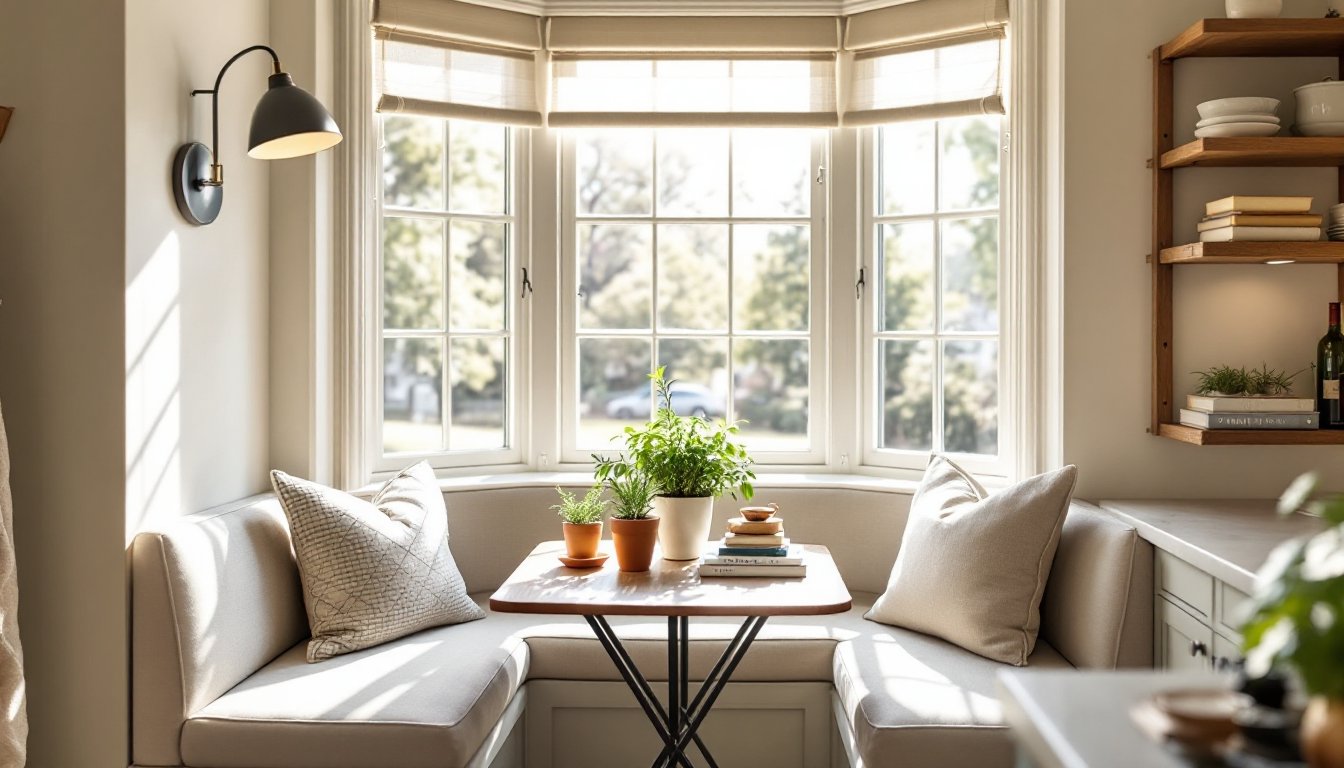
A breakfast nook tucked into a bay window is the dream solution for small kitchens, but only if it’s proportional and functional. Standard banquette depth is 18 to 24 inches, with a height of 15 to 17 inches for seat comfort. Pair this with a small table, 24 to 30 inches wide, and you’ve got seating for two without blocking kitchen access.
Built-in bench seating saves floor space because the base doesn’t need legs: it mounts directly under the window sill. Upholster with durable, stain-resistant fabric, linen blends or performance textiles withstand kitchen spills better than delicate weaves. Add hinged seat storage to tuck away placemats, cookbooks, or linens. Under-seat storage is gold in a small kitchen.
If a full bench won’t fit, two low-back chairs or a single accent chair works. The magic rule: any seating should never obstruct the window view or block the kitchen work triangle. A small round or rectangular bistro table (under 30 inches wide) paired with chairs that tuck fully underneath keeps the bay feeling airy. Metal or wood frames feel lighter than upholstered options in tight quarters.
When evaluating home renovation ideas examples for tight kitchens, seating layouts often make the difference between a cramped afterthought and a genuine functional upgrade. Measure twice, test with cardboard mock-ups, and account for how cabinet doors or drawers might open near the seating area.
Window Treatments That Don’t Eat Up Space
Heavy drapes swallow visual space and light in small kitchens. Instead, choose treatments that retract fully above or beside the bay window frame. Roller shades with a simple white or neutral linen fabric mount inside the frame and roll completely out of sight when raised. Cellular (honeycomb) shades offer insulation value with minimal bulk.
Roman shades are a step up in sophistication, they fold neatly when raised and work with many design styles. Choose light-filtering versions during the day for privacy without blocking sun entirely. Skip layering shades on top of curtains: one simple, functional treatment is all a small bay needs.
Cafe-style curtains (hung from the middle of the window downward) keep the upper bay exposed for light while screening the lower sill from street view. Lightweight linen or cotton blends hang flatter than heavy fabrics. Avoid wide hems, layered panels, or ornamental rods, every inch of visual clutter matters when square footage is limited.
For kitchens where privacy is secondary, film or frost treatments on glass panes provide opacity without hardware or fabric. These also soften harsh afternoon light and cost less than custom shades.
Storage and Shelving Ideas Built Into Your Bay Window
The bay window frame itself becomes storage real estate if you get creative. Floating shelves mounted beneath the window sill hold cookbooks, plants, or small appliances, items you actually reach for while cooking or sitting. Space shelves 12 to 16 inches apart to avoid crowding. Load them light: a bay filled with heavy serving pieces or collections looks cluttered, not curated.
Window seat storage is the workhorse. Build a custom bench with hinged lift-top seating and deep drawers below. This single feature adds 8–12 cubic feet of hidden storage in a footprint that might otherwise feel dead space. Store off-season kitchen items, baking equipment, or table linens where they’re accessible but hidden.
Narrow cube shelving or modular storage units can wrap partially around a bay window’s angled sides, if your bay is on an outside corner. Each side typically has 8 to 12 inches of wall space: that’s enough for one row of slim cubes or open shelving. Paint shelving and the back wall the same neutral tone to make it feel integrated, not bolted-on.
Potted herbs or small plants on shallow shelves bring life and don’t consume cabinet real estate. A row of 4–6 small terra cotta pots with basil, rosemary, and thyme sits naturally on a 36-inch bay sill and serves double duty as decor and function. Ensure watering won’t splash cabinets or appliances below: a simple tray catches drips.
Consider shelving depth carefully, standard shelves are 10 to 12 inches deep. In a bay window alcove, you might squeeze 14 inches without interfering with seating or window operation. Custom shelves cost more but fit perfectly. Stock options from big-box stores rarely match bay geometry without gaps or awkward placement.
Decorating Your Bay Window for Added Warmth and Style
Once the functional bones are in place, seating, storage, light, decor ties the bay into your kitchen’s overall style. A bay window is a natural focal point, so it deserves intentional styling without fussiness. Stick to a consistent palette: your bay should whisper the same aesthetic language as the rest of the kitchen.
Style the window sill with a few curated items: a potted plant, a stack of cookbooks, a small decorative bowl. Avoid the clutter of every spare item finding a home there. In small spaces, empty air is as important as filled space. If your bay catches strong afternoon light, place plants that thrive in bright conditions, succulents, snake plants, or herbs rather than shade lovers.
Add a cushion runner along the bench seat using outdoor-grade fabric if your kitchen gets moisture. This adds comfort and color without the bulk of layered throw pillows. A single well-chosen pillow is enough: more than two looks cramped.
Mirror is a strategic tool in small kitchens. A framed mirror hung beside or across from your bay bounces light and amplifies the sense of space. Choose a frame finish that echoes your cabinet hardware, brushed nickel, matte black, or wood stain, so it feels integrated rather than decorative.
Consult apartment living design strategies for ideas on styling compact spaces with intention. The philosophy translates directly to small kitchens: choose fewer, higher-quality pieces: favor function: let light and air matter more than decoration.
Smart Color and Material Choices for Small Spaces
Color strategy in a bay window starts with the frame and sill. Paint window trim the same off-white, cream, or soft neutral as your kitchen walls, or match cabinetry for a seamless look. Contrasting trim (dark frame against light walls) is bold but visually divides the space, fine if your kitchen is actually generous, risky if it’s tight.
For the bay’s back wall (if it’s separate from the outer wall), consider a subtle pattern or warm neutral one shade lighter or darker than adjacent walls. This subtle depth makes the bay feel intentional without the commitment of wallpaper or a jarring color shift. Many designers use paintable textured wallpaper in small spaces for visual interest without visual noise.
Bench cushion and upholstery colors should complement cabinetry or countertops rather than clash. A warm gray or soft cream bridges most kitchen styles. If your kitchen is bold, say, navy cabinets or black appliances, a cushion in a contrasting solid or a subtle geometric works: a loud pattern in a bay window can feel overwhelming in 100 square feet.
Materials matter for durability and feel. Natural wood shelves age gracefully and complement most kitchen styles. Metal shelving is industrial-chic but shows dust and water spots: wipe regularly if your bay gets steamy from cooking. Upholstered storage benches in solution-dyed fabrics resist moisture, stains, and fading better than natural fibers, crucial in kitchens.
Conclusion
A well-designed bay window transforms a small kitchen from cramped to clever. By layering natural light, compact seating, hidden storage, and thoughtful decor, you turn that protruding alcove into the room’s most functional and inviting feature. Start with placement and light, then build practical storage and seating that respects your kitchen’s workflow. The details, treatment choices, color, materials, follow naturally once the backbone is sound. Your bay window isn’t decoration: it’s an investment in both the kitchen’s usability and your home’s visual appeal.