Table of Contents
ToggleSan Diego’s mild year-round climate, robust real estate market, and culture of innovation make it an ideal location for tiny home living. Whether you’re downsizing for affordability, sustainability, or simplicity, the San Diego area offers unique opportunities and challenges. Unlike other regions where tiny homes function as seasonal retreats, San Diego tiny homes serve as primary residences for thousands. This guide walks you through finding, financing, and designing a tiny home in one of California’s most desirable communities.
Key Takeaways
- San Diego’s mild climate and permissive ADU zoning make tiny home living practical and affordable compared to the region’s $900,000 median home price.
- Finding tiny homes in San Diego requires searching alternative MLS terms like ‘under 800 sq ft’ and contacting specialized builders, since traditional real estate filters don’t capture the tiny home market.
- Neighborhoods like North Park, City Heights, Ocean Beach, and Barrio Logan offer the strongest tiny home communities with varying affordability levels and lifestyle benefits.
- Design a San Diego tiny home around cross-ventilation and flexible layouts rather than fighting temperature extremes, and leverage lofted sleeping areas and outdoor decks to maximize livable space.
- Financing requires creative solutions—construction loans, home equity lines of credit, or tiny home-friendly lenders—since most banks won’t issue mortgages under $50,000–$75,000.
- Salt air and coastal humidity demand moisture-resistant materials like marine-grade plywood and stainless steel hardware to prevent premature deterioration in your tiny home investment.
What Makes San Diego Ideal For Tiny Home Living
San Diego’s combination of climate, affordability relative to Southern California, and forward-thinking zoning practices makes it a tiny home hotspot. The city’s average temperatures rarely dip below 50°F, eliminating the need for massive heating systems and expensive insulation you’d find in colder climates. This means tiny homes here can prioritize open layouts and natural ventilation without sacrificing winter comfort.
The housing market reality is brutal: San Diego’s median home price hovers around $900,000. For many buyers, a $400,000 tiny home represents genuine financial freedom. The city’s proximity to tech hubs, universities, and employment centers attracts young professionals and retirees alike, both demographics drawn to compact living. San Diego also has relatively permissive ADU (accessory dwelling unit) zoning in neighborhoods like North Park, City Heights, and Ocean Beach, creating opportunities to build or place tiny homes on existing properties.
Another advantage: the strong rental market. If you own a tiny home outright, seasonal rentals through platforms like Airbnb can offset carrying costs. Many San Diego owners use this approach to fund their lifestyle while maintaining a primary residence elsewhere.
Finding Tiny Homes For Sale in San Diego
Locating a ready-made tiny home in San Diego requires patience and specificity. Unlike traditional real estate searches, you won’t find a “tiny homes” filter on most MLS platforms. Start by searching terms like “small homes,” “compact living,” and “under 800 sq ft” on Zillow, Redfin, and Trulia. MLS agents in San Diego are becoming more savvy, call local agents who specialize in compact properties or ADU sales.
Directly contact builders and manufacturers. Companies like Incredible Tiny Homes (based in California) and Blokable have San Diego waiting lists. You’ll also find pre-owned tiny homes listed on Craigslist, Facebook Marketplace, and community boards in neighborhoods known for accessory dwelling units. Attend San Diego real estate meetups, the community is active and word-of-mouth often surfaces properties before they hit public listings.
Don’t overlook vacant land paired with a build contract. Buying a lot and contracting with a manufacturer often costs less and gives you site-specific design control. Verify zoning permits carefully: some San Diego neighborhoods restrict tiny homes to family members only or require owner-occupancy for a set period.
Communities and Neighborhoods For Tiny Homes
Certain San Diego neighborhoods embrace tiny home culture more openly than others. North Park leads the way, with progressive planning policies and active ADU development. Young professionals dominate the demographic, and rental demand is high. City Heights offers more affordable land and diverse community support. Ocean Beach and Pacific Beach attract retirees and remote workers who value proximity to the coast: tiny homes here command premium rental rates.
Barrio Logan is emerging as a tiny home hub due to recent zoning reforms and cultural revitalization. Southeast San Diego neighborhoods like Encanto and Skyline offer the cheapest land but require more patience and due diligence on development infrastructure. East Village in downtown San Diego has welcomed tiny home projects as part of urban infill strategy.
Before buying, walk the neighborhood at different times of day. Talk to current residents about parking (a deal-breaker for tiny homes in dense areas), street noise, and development plans. Check the community plan document on the San Diego Planning Department website, it’ll tell you what’s zoned for future development. Attend city council meetings: neighbors often reveal unofficial politics that affect permitting timelines.
Design and Layout Tips For San Diego Tiny Homes
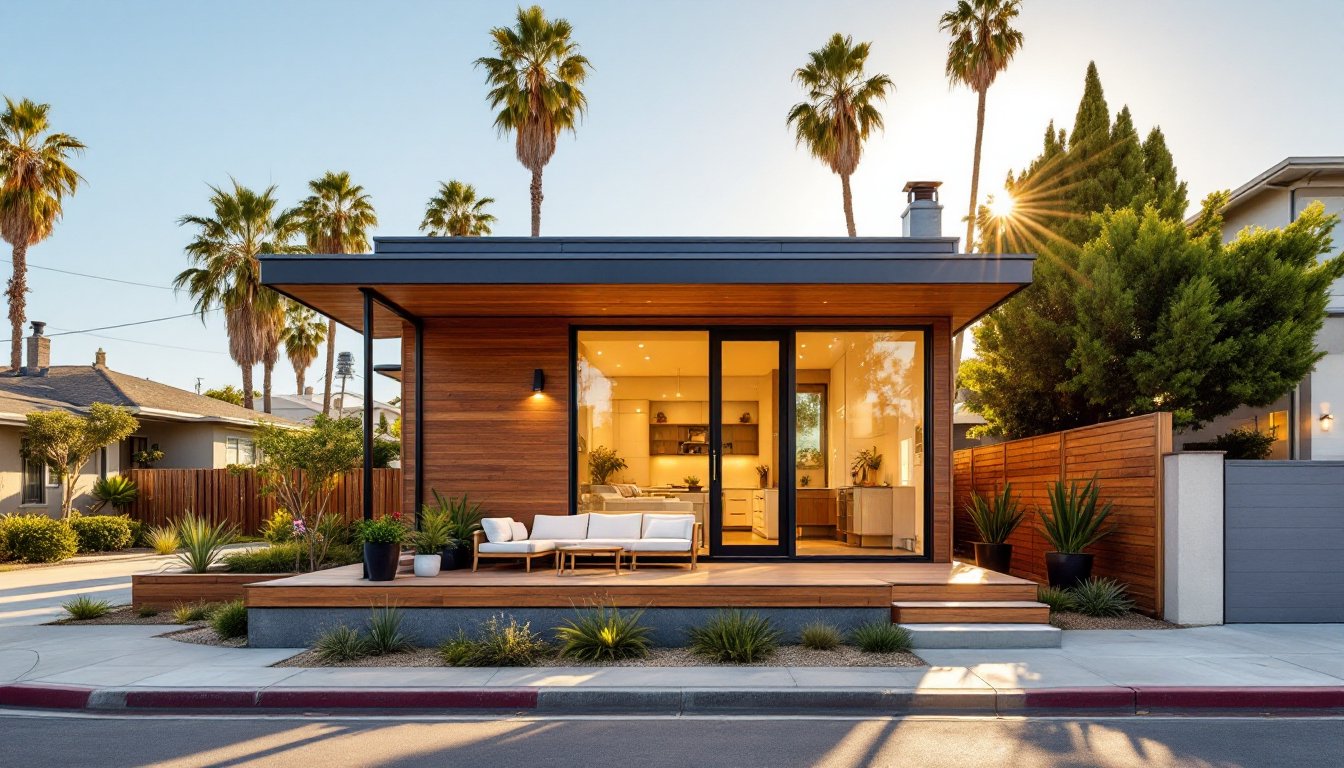
Tiny home design in San Diego demands different thinking than design in harsh climates. Your 300–500 square foot footprint can breathe more because you’re not fighting temperature extremes. Prioritize cross-ventilation: operable windows on opposite walls keep the space cool without constant air conditioning.
Layout principles matter more than square footage. A well-organized 350-square-foot home feels larger than a poorly planned 450-square-footer. Avoid long hallways, they waste precious floor space. Position the bedroom toward the quietest side of the property (away from streets), the kitchen near utilities and entry points, and the living area where you spend most waking hours.
Build in lofted sleeping areas if ceiling height allows. San Diego’s mild temps make lofts practical year-round, unlike northern climates where heat rises and makes sleeping upstairs brutal. Use the space below for a home office, storage, or sitting area.
Experts on Apartment Therapy and platforms dedicated to small space design emphasize flexible furniture over fixed built-ins. San Diego’s mild weather means you can use multipurpose pieces that you’d need to hide in snowier regions.
Maximizing Space in Coastal Weather Conditions
San Diego’s salt air and humidity require thoughtful material choices. Specify moisture-resistant drywall and marine-grade plywood in wall cavities and under-floor framing, standard materials degrade faster near the coast. Choose stainless steel or powder-coated hardware: regular steel corrodes quickly.
Maximize natural light with large south-facing windows and skylights. The year-round sun means you’re not paying heating penalties for that glazing like builders in Minnesota would be. Reflective interior surfaces (light paint, polished concrete) amplify daylight and shrink the perceived boundaries of small rooms. A covered outdoor deck extends your livable square footage by 50–100 square feet at minimal cost, it functions as a third room without adding climate-control expense.
Cost Considerations and Financing Options
A new tiny home in San Diego typically runs $200,000–$500,000 depending on finishes, site conditions, and builder overhead. Prefab models on your own land cost less than fully finished turnkey homes. Used tiny homes range from $150,000–$300,000 but factor in potential foundation repairs, mold inspection, and electrical system upgrades.
Land costs vary wildly by neighborhood. A quarter-acre lot in North Park might run $600,000: the same lot in Encanto could cost $250,000. Budget $50,000–$100,000 for site prep, utilities connection, and permits on top of the home purchase.
Financing a tiny home is trickier than buying a conventional house. Most banks won’t issue mortgages under $50,000–$75,000: it’s unprofitable for them. Solutions: (1) Cash purchase or personal loan, not ideal but common for tiny home buyers. (2) Construction loan with refinance at completion, requires strong credit and reserves. (3) RV loans, if your tiny home is mobile: rates are higher. (4) Home equity line of credit against existing property. (5) Tiny home-friendly lenders like Dwell partnerships or credit unions increasingly willing to write smaller mortgages.
San Diego property taxes run roughly 0.76% of assessed value annually. A $300,000 tiny home costs about $2,280/year in property taxes, far less than a traditional home.
Conclusion
San Diego tiny homes aren’t just a trend: they’re a practical response to housing costs and a lifestyle choice that works in a climate that cooperates. The work begins after purchase, navigating permits, customizing interiors, and finding your niche community. Start by exploring best tiny homes for compact living and reviewing tiny homes guide resources to clarify your priorities before entering the market.