Table of Contents
ToggleGrey kitchens have become the go-to choice for homeowners who want timeless style without trend-chasing. The color works in tight spaces because it reflects light cleverly and creates visual calm, something every cramped kitchen needs. If you’re planning a small grey kitchen remodel or just refreshing cabinetry and accents, these eight practical ideas will help you maximize every square inch while keeping the space feeling open and cohesive. We’ll walk through specific design moves that actually work in real homes, from hardware choices to texture layering, so your grey kitchen doesn’t look cold or cramped.
Key Takeaways
- Small grey kitchen ideas thrive when paired with white elements and proper lighting—combine light grey cabinetry with white walls and LED strip lighting to maximize the sense of space.
- Choose between warm greys (greige, dove grey) for cozy, traditional spaces or cool greys (blue-grey, slate) for modern kitchens, and always test paint samples at different times of day to verify undertones.
- Break up flat grey surfaces with contrasting elements like patterned tile backsplashes, open shelving, matte black hardware, or brushed brass fixtures to add personality without visual clutter.
- Incorporate metallic accents strategically—mix brushed brass, matte black, and stainless steel finishes to create sophistication while avoiding shiny chrome that feels cold in tight spaces.
- Maximize vertical storage with wall-mounted strips, floating shelves, and cabinet organizers to keep a small grey kitchen functional and visually calm without cramming items behind neutral doors.
- Introduce warmth and texture through wood tones, butcher block countertops, natural materials like linen, and organic finishes to prevent grey kitchens from feeling sterile or showroom-like.
Maximize Light with Grey and White Combinations
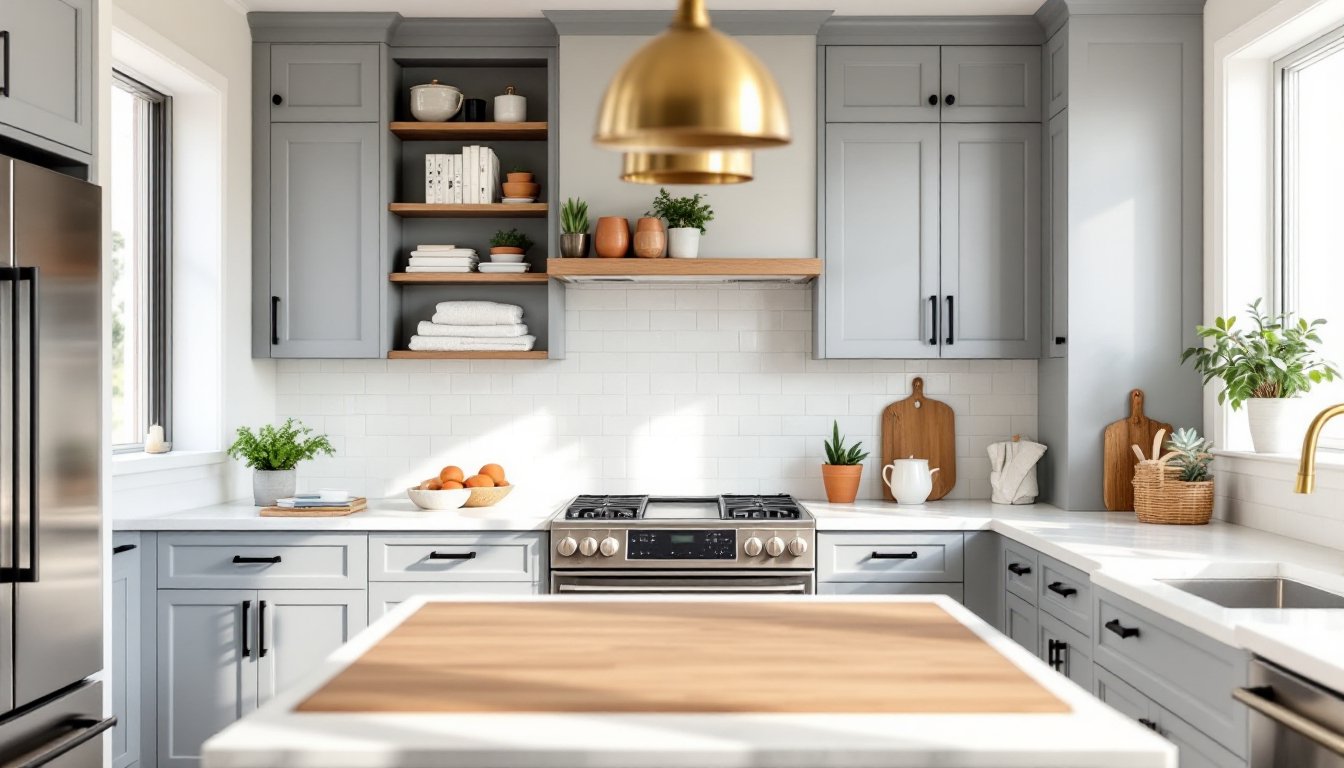
Pairing grey with white is the most efficient way to keep a small kitchen from feeling boxed in. Light grey cabinetry paired with white walls, marble or quartz countertops, and stainless steel appliances creates visual layering that opens up the space. The white acts as a backdrop that bounces natural light around the room, while soft grey grounds the design without absorbing light the way darker colors would.
Consider a soft greige (grey-beige hybrid) for upper cabinets and a slightly deeper grey for the base cabinetry. This modest contrast adds dimension without overwhelming a tight footprint. Pair this with a white subway tile backsplash, it’s classic for a reason, or matte white wall paint. Ensure your kitchen gets natural light through windows: if it doesn’t, under-cabinet LED strip lighting (neutral 4000K color temperature) fills gaps and makes white surfaces feel warmer rather than sterile.
One common mistake: using pure white trim or crown molding with soft grey walls can feel choppy in a small space. Instead, choose trim that’s just one or two shades lighter than your grey, creating a subtle frame that doesn’t fracture sight lines.
Choose the Right Shade of Grey for Your Kitchen
Warm Greys vs. Cool Greys
Grey comes in two flavor profiles: warm (leaning toward beige or taupe) and cool (leaning toward blue or green). This choice matters more in a small kitchen because the wrong undertone makes the space feel cramped or sterile.
Warm greys (like greige, dove grey, or warm taupe) pair well with brass hardware, warm wood tones, and natural materials like linen. They’re forgiving under artificial light and play well with traditional or transitional kitchen styles. If your kitchen has limited natural light or east-facing windows that get warm morning sun, warm grey won’t fight against those conditions.
Cool greys (soft blue-grey, slate grey, or true neutral grey) work beautifully with stainless steel, chrome, or matte black hardware and pair naturally with marble and contemporary finishes. These greys pop with high natural light and suit modern or Scandinavian aesthetics. But, in a windowless or north-facing kitchen, cool grey can feel a bit chilly without intentional warmth added elsewhere.
Practical test: Get paint samples in at least two warm and two cool greys. Paint A4-sized swatches on your kitchen wall and observe them at different times of day, morning, midday, and evening under artificial light. The undertone shifts depending on surrounding light. Most people discover their preference within 3–4 days of living with samples on the wall.
Add Visual Interest with Grey Cabinetry and Contrasting Elements
Solid grey cabinetry alone reads as flat and utilitarian. Break up the expanse with contrast: consider a darker grey or charcoal lower cabinet run paired with lighter grey uppers, or swap one section of cabinetry for open shelving painted white or stained natural wood. Open shelving works especially well above the sink or on an awkward corner wall, it creates a visual break and lets you display cookbooks, pottery, or a few carefully chosen jars.
Alternatively, add an accent wall or a bold backsplash. A patterned tile backsplash (geometric, terrazzo, or small mosaics in greys, blacks, and whites) draws the eye upward and adds personality. Handmade subway tile or brick-pattern mosaics in warm grey tones feel less sterile than polished white tile.
Cabinet hardware is a quick but impactful contrast tool. Matte black, brushed brass, or oil-rubbed bronze handles pop against grey cabinetry, avoid shiny chrome, which can feel cold and remind people of commercial kitchens. Home Renovation Ideas Examples often highlight how small hardware swaps completely shift a kitchen’s personality.
One caution: if your grey kitchen is truly tiny (under 70 square feet), limit contrast to one or two moves. Too many competing colors or patterns fragments an already tight space and makes it feel chaotic rather than intentional.
Incorporate Metallic Accents and Hardware
Metallics are the secret weapon for making grey kitchens feel polished without adding visual clutter. A mix of finishes, brushed brass faucet, stainless steel appliances, matte black cabinet pulls, and perhaps a brushed nickel pendant light, creates sophistication in a small footprint.
Stainless steel appliances remain the standard for grey kitchens because they complement cool and warm greys equally and wear well. But, they show fingerprints relentlessly. If that bothers you, consider stainless steel finish appliances with a fingerprint-resistant coating, or commit to microfiber cloths and vinegar solution as part of your routine.
For faucets, brushed brass or brushed gold has become the warm-toned option that feels current without dating itself. Pair it with matte or brushed finishes on cabinet hardware rather than polished chrome. A polished finish bounces light aggressively in a tight space, which can feel jarring, matte finishes absorb light subtly and feel calmer.
Pendant lights over an island or sink (if your layout has one) should coordinate metallically with your hardware. A brass or bronze pendant paired with matching cabinet pulls unifies the design. In a galley kitchen without an island, consider a slim brushed brass or matte black under-cabinet light strip instead of bulky overhead fixtures.
One practical note: higher-quality stainless and brushed finishes cost more upfront but hide wear better over years of daily use. Budget entry-level hardware wears through coatings quickly.
Use Clever Storage Solutions to Keep Grey Kitchens Organized
Small kitchens demand storage discipline. Grey cabinetry masks visual clutter well, dishes and tools don’t create jarring color jumps, but you still need a system to avoid cramming everything behind those neutral doors.
Vert ical dividers inside cabinets separate baking sheets, cutting boards, and serving platters so you’re not stacking and shuffling. Pull-out drawers on glides let you access items in the back without reaching past what’s in front. Lazy Susans work in corner cabinets (often a dead-space problem) and let you spin to find spices or canned goods without that awkward crouch.
Wall-mounted magnetic strips hold knives and metal kitchen tools, freeing up drawer space. A slim open shelf (18 to 24 inches wide) above the counter or tucked beside the fridge displays cookbooks and a few handsome jars of staples, it breaks up grey expanse and functions as storage. The Kitchn frequently showcases clever small-kitchen organization that proves grey kitchens handle visible storage without feeling disorganized when items are curated.
Underutilized vertical space is the biggest storage mistake in small kitchens. If you have 8 to 10 feet of wall height and cabinetry only goes 36 inches up, add floating shelves (stained wood or white-painted) from 36 to 60 inches up. They don’t eat floor space, add function, and break visual monotony of a single grey cabinet run.
Bring Warmth to Grey With Wood Tones and Natural Textures
Pure grey and white feels sterile without natural warmth. Introduce wood, on open shelving, as a butcher block or wood-look countertop, or in a simple wooden shelf for décor, to humanize the space. Medium to warm-toned wood (oak, walnut, or reclaimed pine finishes) pairs beautifully with soft grey. Avoid very dark stained wood, which competes with grey for visual weight and makes tight spaces feel darker.
Butcher block countertops are underrated in small grey kitchens. They warm up the palette, introduce organic texture, and cost less than stone. They do require sealing and periodic oiling, but that maintenance is straightforward. Alternatively, a wood-look quartz or laminate (like Caesarstone or Wilsonart) gives warmth without upkeep if you prefer low-maintenance surfaces.
Natural textures beyond wood help too: linen kitchen towels in cream or light grey, a woven placemat or runner, a terra cotta or concrete planter with herbs on the windowsill. These small touches remind people that grey kitchens are lived-in, not showroom sterile. According to 10 Easy Pieces: Small Kitchens, thoughtful material layering, mixing matte and textured surfaces, is how professional designers make compact kitchens feel intentional rather than cramped.
When planning a grey kitchen renovation, budget for at least one significant textured element beyond painted cabinetry: a wood countertop edge, a tile backsplash with variation, or a wood accent wall. It’s the difference between a kitchen that feels like a chore to spend time in and one that feels genuinely home.