Table of Contents
ToggleThe tiny home movement has shifted from fringe lifestyle trend to mainstream housing solution. Lowe’s entry into the modular tiny home market reflects a simple truth: affordable, quality housing doesn’t have to come from specialized builders in far-flung communities. Lowe’s Tiny Homes brings factory-built efficiency, verified materials, and transparent pricing to buyers looking for a practical alternative to rising real estate costs. Whether you’re a first-time homebuyer, downsizing retiree, or someone seeking sustainable living without the construction headaches, understanding how Lowe’s tiny homes work, and whether they’re right for you, means examining the mechanics, costs, and real-world trade-offs involved.
Key Takeaways
- Lowe’s Tiny Homes are factory-built modular dwellings that meet all building codes and arrive pre-wired with appliances, HVAC, plumbing, and electrical systems already installed for faster assembly.
- Base prices for Lowe’s tiny homes start at $40,000–$60,000 per module, but total turnkey costs typically range $50,000–$70,000 when including foundation prep, transport, and utility connections.
- The installation process from order to move-in takes 4–12 weeks, significantly faster than site-built construction while maintaining consistent quality control through factory inspections.
- Lowe’s tiny homes offer meaningful customization options including exterior cladding, cabinet finishes, countertops, and paint colors, though major structural changes incur additional costs.
- Key advantages include predictable costs, code compliance, and financing parity with traditional mortgages, but disadvantages such as limited resale markets in some regions and lot-specific feasibility challenges require careful evaluation.
- Successful Lowe’s tiny home projects depend on thorough site preparation, licensed professional utility connections, and verifying local building requirements before commitment.
What Are Lowe’s Tiny Homes and How Do They Work?
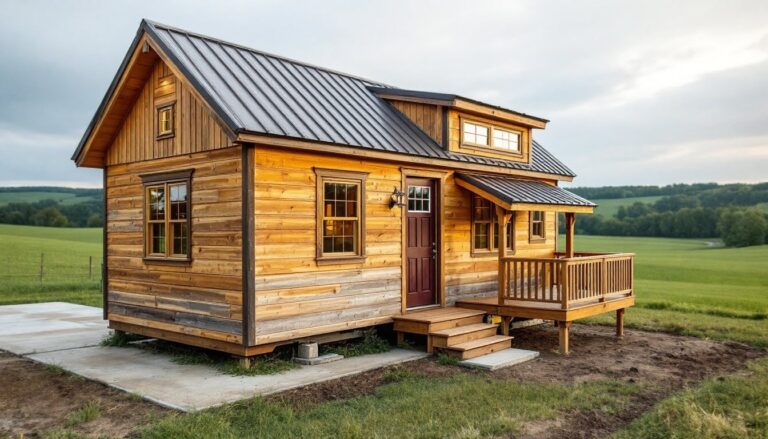
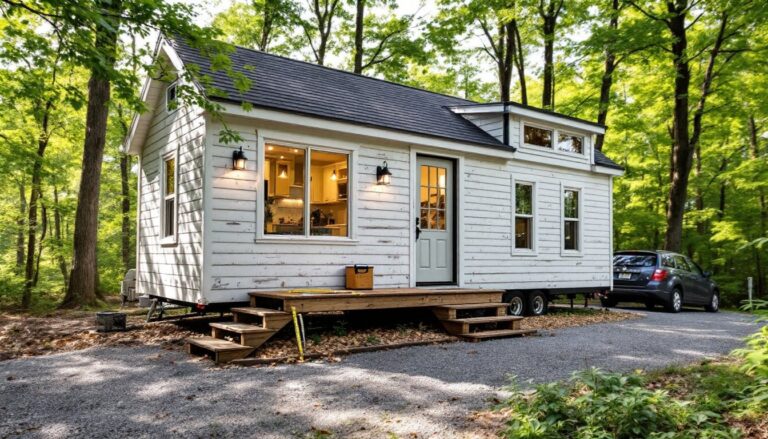
Lowe’s Tiny Homes are modular dwellings built in a factory setting to standardized specifications, then transported and assembled on-site. Unlike traditional stick-built homes where construction happens where the structure stands, modular homes are manufactured in climate-controlled conditions, inspected at each stage, and then delivered as pre-built modules that stack or connect on a prepared foundation.
The process breaks down into three phases. First, you select a floor plan and options from Lowe’s catalog, these are pre-designed layouts ranging from 400 to 800 square feet. Second, the modules are built in a factory using standardized materials and processes, which cuts waste and speeds production compared to site-built work. Third, the completed modules arrive on your lot via specialized transport, where foundation crews and local contractors handle final assembly, utility connections, and inspections.
One critical distinction: Lowe’s Tiny Homes are certified as modular homes, meaning they meet all applicable building codes (IRC standards vary by jurisdiction, so verify local requirements). They’re shipped with HVAC systems, electrical rough-in, plumbing stubs, and insulation already installed, you’re not buying a shell. How to Build a Tiny Home: A Complete Beginner’s Guide covers site-built construction from the ground up, but Lowe’s approach eliminates the longest, most unpredictable phase of that process.
Key Features and Design Options
Lowe’s Tiny Homes come standard with features that reflect the retailer’s supply chain advantages. Expect Whirlpool appliances, quality plywood subflooring (not particleboard), vinyl or tile flooring depending on the plan, and architectural shingles on the roof. Insulation varies by climate zone, R-19 to R-38 in walls is typical for modular builds in most U.S. regions.
Electrical service comes 200-amp ready with a main breaker panel, meaning the modules arrive pre-wired for standard residential circuits. Plumbing includes PEX tubing and shutoff valves pre-installed: local licensed plumbers make final connections to your septic or municipal system. HVAC systems depend on the plan, most include a mini-split or traditional central unit, though you’ll need local technicians to charge refrigerant and test the system.
Customization and Layout Flexibility
Unlike completely standardized prefabs, Lowe’s offers meaningful customization within guardrails. You can swap exterior cladding (vinyl siding, fiber cement board, or composite panels), choose cabinet finishes, select tile or laminate countertops, and pick paint colors. Some plans allow you to move walls slightly to accommodate a different bedroom count or reconfigure the kitchen, but not every module can be modified, and structural changes cost more and delay delivery.
Floor plans range from one-bedroom, one-bath studios (ideal for ADUs or guest houses) to two-bedroom, one-and-a-half-bath layouts with living, kitchen, and dining areas. Loft bedrooms are common in the smaller units to maximize usable square footage. Exterior dimensions are fixed by transport regulations (modules can’t exceed 8.5 feet in width to stay street-legal), so living space is always compact but functional. Essential Tiny Homes Tools for Building and Living Small helps you prepare the site and make the setup as efficient as the home itself.
Cost Breakdown and Affordability
Base prices for Lowe’s Tiny Homes start around $40,000 to $60,000 for a single-module unit (2024–2026 pricing: inflation and supply-chain shifts affect real-world costs). A two-module layout (essentially doubling the footprint) runs $80,000 to $120,000 before site work and delivery.
Here’s what that number includes and what it doesn’t:
Included: Factory assembly, all built-in appliances, plumbing and electrical rough-in, HVAC unit, flooring, cabinets, roofing, exterior siding.
Not Included (your responsibility): Foundation and site prep ($5,000–$15,000 depending on soil and terrain), transportation to your lot ($3,000–$8,000 per module), final utility connections and inspections ($2,000–$5,000), and any customization or upgrades ($500–$5,000). Some regions require a licensed contractor to oversee assembly, adding labor costs.
Total turnkey cost typically lands between $50,000 and $70,000 per module in most markets, making it genuinely competitive with regional real estate, especially in high-cost areas or for secondary properties. Financing through Lowe’s or partnering banks treats modular homes like traditional mortgages if they’re on permanent foundations, though interest rates may be slightly higher. Regional cost variations matter: a California lot with soil testing will cost far more to prepare than rural acreage in Texas.
Installation and Setup Process
The installation timeline spans 4–12 weeks from order to move-in day, depending on how fast your foundation is ready. Rushing this phase is a false economy: a properly leveled and inspected foundation prevents doors from sticking, cabinets from warping, and structural stress later.
Step 1: Site Preparation. Clear and grade the lot, then pour a concrete slab or build a traditional foundation (piers or full basement work too). Your module sits on a foundation built to the home’s footprint specs, these are provided by Lowe’s. A licensed surveyor and foundation contractor should verify elevations and drainage before the modules arrive.
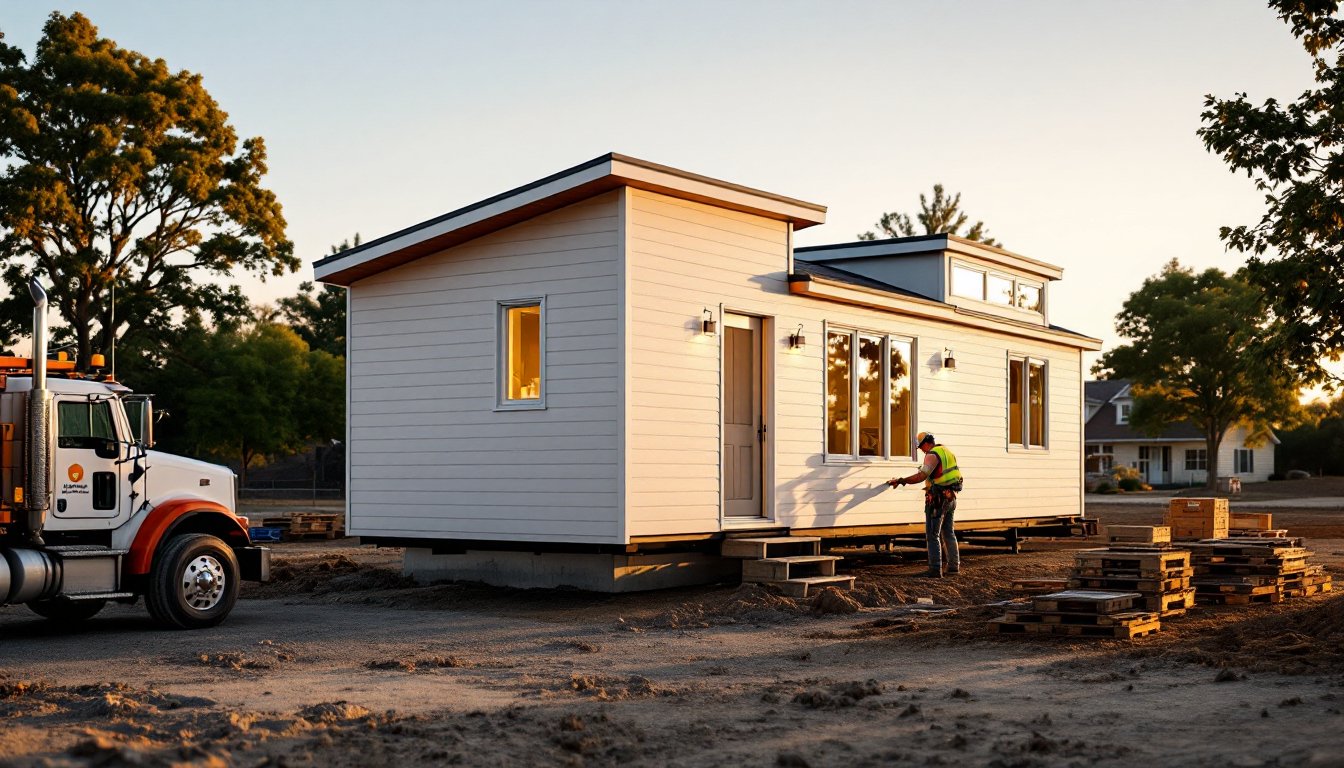
Step 2: Module Delivery. A specialized transport company delivers the module(s) on a semi-truck. Crane or hydraulic lift access to your lot is essential: if your lot is landlocked or tight, call the logistics team early. Modules are typically set within a day, though weather can delay the process.
Step 3: Final Assembly and Connections. Licensed electricians and plumbers arrive to connect the modules to each other (if multiple units), link to your utility feeds, and run final inspections. All structural bolts and fasteners are tightened, exterior siding is sealed, and the HVAC system is tested. Expect this phase to take 1–2 weeks.
Step 4: Inspections. Local building officials inspect the completed assembly, foundations, electrical, and plumbing. Modular homes must pass the same inspections as site-built homes, so don’t assume the factory work skips this step. Tiny Homes Tips: Essential Advice for Small Space Living covers the post-move-in adjustments that keep your new home running smoothly.
Important Safety Note: Only licensed professionals should handle electrical and plumbing hookups. Modular homes are wired and plumbed in the factory, but final connections to your property’s main service and water supply must meet local code and be signed off by inspectors.
Pros and Cons for Homeowners
Advantages:
- Predictable Cost & Timeline. You know the factory price upfront: no surprise cost overruns from weather delays or material shortages mid-build.
- Quality Control. Factory construction means consistent framing, electrical runs, and insulation, no rushed or hidden work. Every module is inspected before it leaves the factory.
- Speed to Occupancy. Four to twelve weeks from order to move-in beats the 6–12 months (or longer) of site-built construction.
- Code-Compliant. Modular homes pass rigorous factory inspections plus local building codes. You get a structure that’s as code-verified as any traditional home.
- Financing Parity. Banks treat permanent modular homes like stick-built homes for mortgages, so you’re not stuck with RV financing or predatory personal loans.
Disadvantages:
- Limited Customization. You pick from existing floor plans: major layout changes cost extra and slow delivery. You can’t easily enlarge a kitchen mid-build the way you might with site-built work.
- Resale Uncertainty. Modular homes have a smaller resale market in some regions. Rural or isolated areas may find fewer buyers familiar with or interested in modular construction. Appraisers sometimes undervalue them.
- Lot Requirements. Not every lot qualifies, narrow urban plots, steep slopes, or landlocked acreage can complicate or kill a project. Your foundation contractor may say “not feasible here.”
- Hidden Costs. Site prep, transport, final connections, and inspections add 30–50% to the base price. Budget carefully and get quotes in writing before committing.
- Aesthetic Sameness. Modular homes from the same manufacturer tend to look alike. If you value architectural uniqueness, factory layouts may feel cookie-cutter.
Design inspiration and real-world reviews help balance expectations. Tiny Home Reviews: Discover offers peer feedback on what works and what doesn’t after move-in. Platforms like Houzz and Dwell showcase modern modular and tiny home designs, while HGTV features renovation stories that may include modular solutions.
Conclusion
Lowe’s Tiny Homes represent a grown-up evolution in modular housing, reliable, transparent, and genuinely affordable for homeowners serious about downsizing or entering the market without a massive budget or construction nightmare. They’re not right for everyone (custom-build dreamers and buyers in markets with weak modular resale may want to explore alternatives), but for practical buyers in the 2026 housing market, they’re worth serious consideration. Do your assignments on your local lot, confirm financing, and get multiple bids on site prep, then you’ll know whether a modular tiny home is your answer.