Table of Contents
ToggleA small entryway with stairs presents one of the trickiest design challenges in residential homes. You’re balancing foot traffic, safety codes, storage needs, and visual appeal in a space that might feel cramped before you even walk through the front door. The good news? Smart layouts, strategic storage, and thoughtful lighting can transform a tight entry into a functional, welcoming space that actually works harder than larger foyers. This guide walks through practical solutions that work in real homes, not just magazines.
Key Takeaways
- Measure your entryway carefully and account for building code requirements, such as stair treads at least 10 inches deep and 6 feet 8 inches of headroom clearance, before designing any small entryway with stairs.
- Maximize under-stair storage by installing built-in shelving, cubbies, or storage benches that follow the stair angle rather than forcing rectangular storage into an angled space.
- Strategic lighting and light, neutral wall colors are essential to making a cramped entryway feel larger and more welcoming without expensive renovations.
- Choose wall-mounted hooks, vertical shoe racks, and slim console tables instead of freestanding furniture to keep the floor open, safe, and visually spacious.
- Paint cubbies and bench fronts in the same color family as walls to create intentional architecture, then use colorful bins and accessories for easy refreshes.
Assess Your Space and Layout
Before buying a single shelf or can of paint, measure your entryway carefully. Note the ceiling height, doorway width, stair dimensions (tread depth and riser height), and any existing obstacles like HVAC vents, light switches, or outlets. Step back and observe how people actually move through the space, do they bump into stairs reaching for a coat? Does light flood in from a window, or is it dark?
Small entryway with stairs ideas often fail because they don’t account for building code requirements. The International Residential Code (IRC) mandates specific stair dimensions: treads must be at least 10 inches deep (measured from nose to nose), and risers must be between 7 and 8 inches tall. Headroom clearance above stairs must be at least 6 feet 8 inches. These aren’t suggestions, they’re safety minimums that affect how you can use the space beneath stairs.
Sketch out a rough floor plan showing the stair footprint, door swing, and wall space. This reveals where you can realistically add storage, furniture, or shelving without creating a traffic jam. A 4-foot-wide entryway with a 3-foot staircase leaves only 1 foot on either side, tight, but workable if you plan strategically.
Maximize Under-Stair Storage Solutions
The space beneath stairs is prime real estate, and often completely wasted. This triangular gap can hold surprising amounts of gear, shoes, seasonal items, or folded baskets without encroaching on your living area.
Built-In Shelving and Cubbies
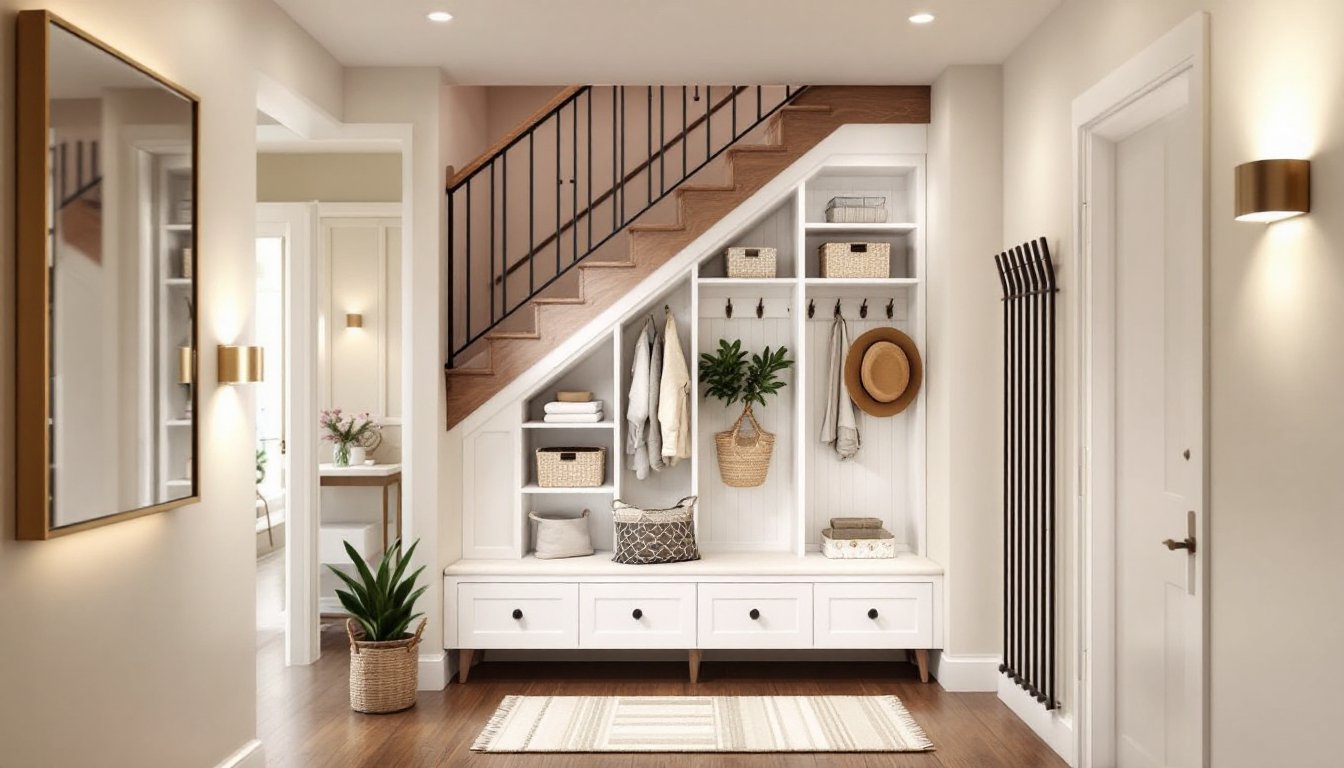
Built-in shelving follows the stair angle, so don’t force rectangular shelves into an angled space. Instead, design shelves that step up with the staircase or use angled verticals that run parallel to the stringer (the angled support beam). You’ll lose some depth as you go up, but that’s expected, the lower shelves hold bulky winter boots, and upper shelves store lighter items like gloves or mail.
Cubbies work particularly well because they define storage by compartment size rather than forcing items into generic shelves. Each cubby becomes its own storage zone: shoes in one, backpacks in another, sports gear in a third. Frame them with 2-by-4s bolted to the stringer and wall studs, then face them with plywood or finish-grade lumber. Aim for individual compartments about 12 to 18 inches wide so items don’t shift around.
If your stairs are open (no closed sides), consider whether you want to enclose the space for a cleaner look or leave it open for visibility and airflow. Enclosed storage looks tidier but requires doors or curtains that swing out, taking up floor space. Open cubbies are more accessible but demand neater organizing.
The build typically requires a reciprocating saw (to cut the angle into wood), a level, a drill, and proper lag bolts rated for weight-bearing. If you’re not confident anchoring shelves at an angle, hire a handyperson or carpenter, a collapsed shelf full of winter gear is a safety and injury risk.
Stylish Storage Benches and Drawers
A storage bench positioned against the wall or beneath a low section of stairs offers seating, storage, and a visual anchor for the space. Standard benches are 14 to 18 inches tall and 36 to 48 inches long. In a tight entry, a 36-inch bench with internal storage for shoes and gear is ideal, visitors can sit to tie boots, and you hide clutter.
Build a simple plywood box with a hinged top and interior dividers for shoes. Upholster the seat with 2-inch foam and fabric for comfort. Add decorative legs (tapered or turned) so it doesn’t feel like a storage box, or go minimalist with a modern slab design. Paint or stain it to match trim or doors.
Drawer cabinets work if you have a dead-end corner. A 24-inch-wide cabinet with three shallow drawers (one for mail, one for keys and cords, one for small tools) takes advantage of deep under-stair pockets without dominating the space. Ensure drawers are easy to open, tight spaces demand smooth, full-extension slides, not cheap tracks that jam.
Create Visual Space With Lighting and Color
Lighting is the secret weapon in tight spaces. A dark entryway with stairs feels smaller and more claustrophobic: good light opens it up. Install recessed lights in the ceiling (6 to 8 feet on center, minimum 12 inches from walls) or, if ceiling access is limited, use wall sconces flanking a mirror. A mirror opposite or beside the entry door reflects light and makes the space feel bigger, it’s the oldest trick, and it works.
Add task lighting where people need it: a small LED strip under the handrail illuminates treads safely and guides people up at night without harsh brightness. Warm white light (2700K color temperature) feels welcoming: cool white (4000K+) can feel institutional in a home.
Color choices matter in narrow spaces. Light, neutral walls (soft whites, pale grays, warm beiges) expand the feeling, while dark accent walls draw the eye and can make a space feel smaller. That said, a soft sage, soft blue, or warm taupe can add personality without shrinking the room if used on one wall only. Paint the walls first, then assess how the staircase, whether wood, painted, or carpeted, interacts with them.
For under-stair storage, color cohesion is key. Painted cubbies or bench fronts in the same color family as walls read as intentional architecture, not just stuffed shelving. If you want contrast, save it for accessories: colorful storage bins, throw pillows on the bench, or a runner rug on stairs. These are easy swaps when you want a refresh without major rework.
Functional Entryway Furniture for Compact Areas
In a space where stairs already take 30 to 40 percent of the footprint, furniture must earn its place. Here’s what actually works:
Coat Racks and Hooks: Wall-mounted hooks (not a freestanding coat rack) take zero floor space. Install them 60 to 66 inches high so people don’t whack their heads, and add five to seven heavy-duty hooks per linear foot of wall. A slim coat rack, 18 to 24 inches wide and topped with a shelf for hats or bags, works only if it’s tucked in a corner.
Shoe Storage: Dedicated shoe racks prevent clutter. A vertical shoe rack (24 to 36 inches wide, angled or slatted) holds 8 to 12 pairs without sprawling. Position it where people naturally shed footwear, usually near the door and away from the stair zone to avoid trip hazards.
Slim Console Table: A 10 to 12-inch-deep console table against one wall works for keys, mail, and a small lamp. Don’t go deeper, it’ll block sightlines and make the space feel cramped.
The design philosophy: remove every item that isn’t essential, or build it into the walls. Freestanding furniture in a small entryway creates visual chaos and obstacles. Built-ins, hooks, and wall-mounted pieces keep the floor open and safe.
When shopping for these pieces, check small entryway ideas from major design sources to see how pros handle furniture placement in tight areas. You’ll notice successful designs cluster storage vertically rather than spreading it horizontally. Popular home renovation blogs like Young House Love also feature budget entryway projects that tackle similar constraints. For more stylish and practical inspiration, explore 25 small entryway designs that balance function with aesthetics. And if you’re thinking bigger picture, tiny homes ideas showcase similar space-maximizing strategies that apply to entryways too.
Conclusion
A small entryway with stairs doesn’t have to feel cramped or look cluttered. By maximizing under-stair storage, using light and color strategically, and choosing furniture that serves multiple functions, you create an entry that works as hard as it looks. Start with your measurement and floor plan, then layer in storage solutions that fit your family’s actual needs, not Pinterest aesthetics. The space should welcome people and quietly handle the daily gear of living. That’s the goal.